
Why planning for housing matters
Our city is growing. According to the Queensland Government’s SEQ Regional Plan, ShapingSEQ 2023, by 2046 we will need an extra 125,800 homes to support a population of around 792,700 people. To help plan for this growth, City of Moreton Bay explored where and how we live now, as well as what houses we will need in the future. The key findings include:
- If current trends continue, there will be a mismatch between the types of housing available in the city and the types of housing people need in the future.
- City of Moreton Bay’s population aged over 60 is growing at a faster rate than the rest of South East Queensland. •
- Most new housing is being built in new (greenfield) suburbs, rather than in established suburbs.
More housing choice
We need a wider mix of homes, including apartments, townhouses, row or terrace housing and granny flats (see images and descriptions on the next page), alongside traditional houses. This helps people find homes that suit their needs and budget and stay in their community as their needs change. A wider mix of housing choices in our established suburbs also helps us to manage ‘urban sprawl’, better protect our rural and natural areas and use our existing infrastructure more efficiently.
Supporting affordable living
Council doesn’t control house sale prices or rents, but planning can support more affordable living. This means having enough land for all housing types and by locating more homes closer to public transport, services and shopping centres, jobs or schools, so the journey to get to these places does not add to the overall cost of living.
Planning ahead
Growth is unavoidable and how we plan for it is important. We’ve heard that cost of living matters, and people support new housing when it is well located and supported by infrastructure. This is what Council is aiming to achieve through the new planning scheme.
How planning for housing impacts you
This is your city. By having your say, you can help shape how it grows, and the kind of place your family will live in for years to come.
Good planning means putting homes in the right places, supported by transport, parks, shops and other services. It also creates better neighbourhoods, with well-designed housing and a mix of homes that give people real choice as their needs change.
The current planning scheme
The planning scheme sets where and how different types of housing can be built, from rural and coastal areas to established suburbs.
It guides where growth should occur, such as where a wider mix of homes are encouraged and where new (greenfield) suburbs will be established.
While the planning scheme sets the rules for development, it cannot force landowners to sell or build. It also does not control when development happens.
How the planning scheme could change
While around 75% of the city will be preserved as rural and natural areas, we still need to carefully plan our urban areas to ensure future housing and community needs can be accommodated as we grow. Through the planning scheme review, Council is exploring ways to:
- provide enough housing to meet future demand (as set out by the State Government’s SEQ Regional Plan, ShapingSEQ 2023)
- increase housing choice to suit different household sizes and needs
- support affordable living by locating more homes closer to jobs, transport and services
- enhance local identity
- respond to the natural environment.
We want to encourage more housing choices across the city. This includes focusing on medium and higher density housing in areas that can best support it, such as near business and shopping centres, train stations as well as providing a greater range of dwellings in our new (greenfield) suburbs.
This may include changes to zones and building heights in targeted locations.
It could also include more flexible rules in established suburbs to allow a wider mix of housing types, such as those shown in Figure 1.
The different housing choices being considered are shown
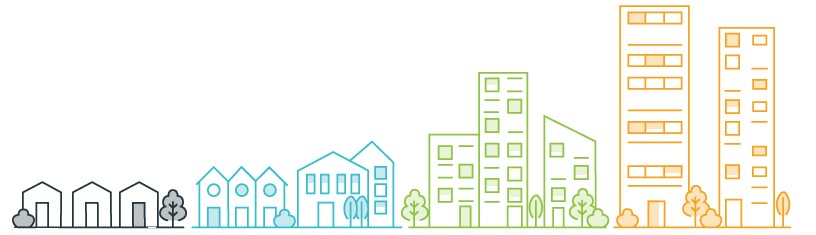
Figure 1: different types of housing
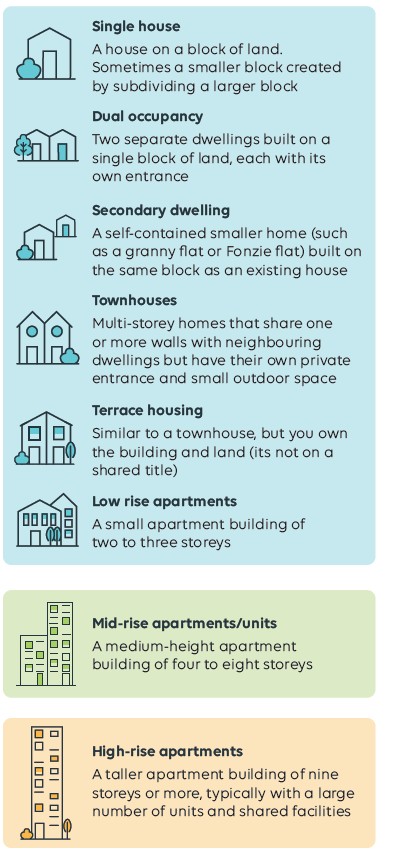
Figure 2: different housing choices
More information
Scroll through and select the links below to find out more.
Loading...
-
-
Frequently asked questions
-
Explore our current planning scheme
-
Other consultations informing this project
-
Document Library
-
Imagine our city
Learn how we're planning sustainable growth, housing, transport jobs and environment.