
Why planning for local identity matters
Our city is expected to grow to around 792,700 people by 2046 according to the Queensland Government’s SEQ Regional Plan, bringing new homes, jobs and infrastructure. Good planning starts with understanding what makes our neighbourhoods special, so growth reflects and builds on these qualities.
From our coastal communities and rural townships to our established suburbs and new (greenfield) suburbs, City of Moreton Bay is made up of different neighbourhoods with many identities.
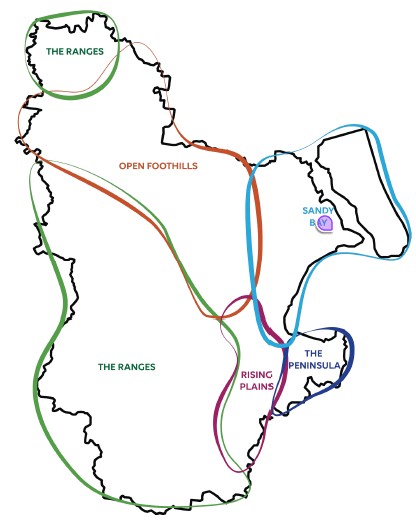
Council has explored what makes different parts of the city unique. This work identified several different identity types, shown on the map, and what people in these areas value:
- Open Foothills – quiet neighbourhoods, connections to natural areas, waterways and large open spaces, with easy access to centres and a creative, local culture
- The Peninsula – urban bayside lifestyle, parks and leafy streets, with strong access to services and a mix of heritage and vibrant neighbourhoods
- The Ranges – green backdrop of bushland, waterways and rural living, with peaceful neighbourhoods and scenic views to the bay and Glasshouse Mountains
- Rising Plains – vibrant urban neighbourhoods with connections to natural areas, with good access to services and transport
- Sandy Bay – natural habitats, beaches and wide open spaces, with a relaxed, coastal feel
Growth is unavoidable and how we plan for it matters. There will be changes in existing areas and new (greenfield) neighbourhoods will be created. It’s important these changes are well-managed through good planning and design.
How planning for local identity impacts you
This is your city. By having your say, you can help shape how it grows, and the kind of neighbourhood your family will live in for years to come.
Good planning means building on the things people love about their area, the leafy green streets, the green space, the coast or their access to shops, services, schools, and restaurants. It also helps create better neighbourhoods, with well-designed buildings and streets, street trees, landscaping, and open space while maintaining local heritage listed places and places of cultural significance.
The current planning scheme
The planning scheme sets out 'Regional Character Maps’ and identifies 'Place Types', that guide development across the city. Currently, it applies the same rules across different areas, and this is a focus for improvement.
How the planning scheme could change
We are looking at improving how the planning scheme approaches the different types of places in City of Moreton Bay to better reflect the identity of our neighbourhoods.
The planning scheme plays an important role in shaping the identity of our neighbourhoods. It does this by guiding:
- Building design - including height, layout and how new development fits with existing areas
- Streets and public spaces - including trees, landscaping and signage
- Vegetation and landscapes - protecting significant trees and scenic areas like hills and coastlines
- Neighbourhood layout - including subdivision design, walkability and parks and open spaces
- Land use - the mix of housing, centres, and rural areas
- Heritage and culture - maintaining local heritage listed places and places of cultural significance.
These aspects may be managed in different ways in different areas to enhance the identity of our neighbourhoods as they grow.
Through engaging with our community on different planning scheme related projects, we are gaining a clearer understanding of what makes different parts of the city special and unique. We want the new planning scheme to build on this deeper understanding.
What we've heard from Moreton Says
When asked what people liked most about the identity of their neighbourhood, the most selected characteristics overall were (Moreton Says, 2022):
- leafy green character (60%)
- connections to bushland and/or waterways (60%)
- parks and recreation places (54%)
- friendly streets for riding bikes and walking (41%).
More information
Scroll through and select the links below to find out more.
Loading...
-
-
Frequently asked questions
-
Explore our current planning scheme
-
Other consultations informing this project
-
Document Library
-
Imagine our city
Learn how we're planning sustainable growth, housing, transport jobs and environment.